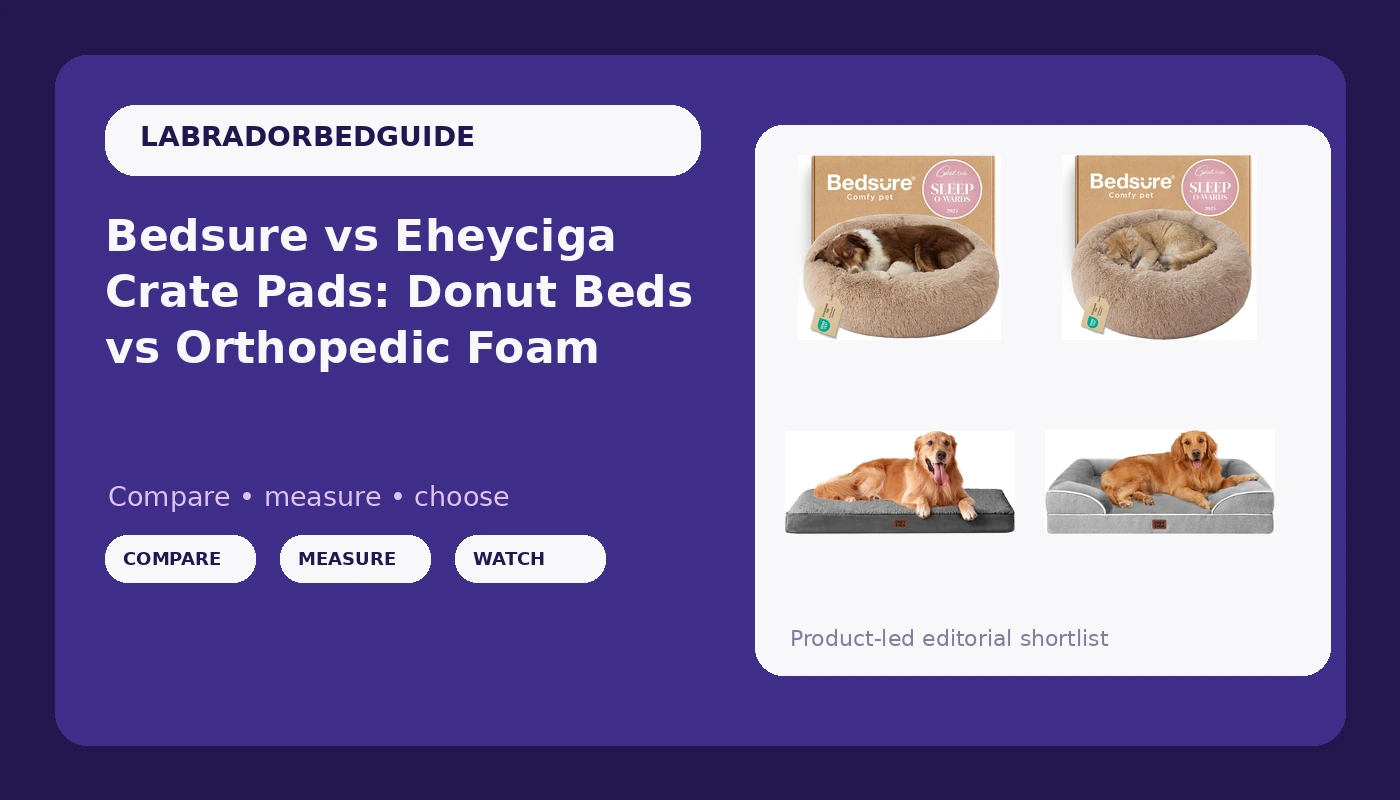
The bedsure vs eheyciga crate pads question shows up in my inbox about twice a month, and it always comes from the same person: a lab owner with a young dog, a crate in the corner of the bedroom, and a budget that does not stretch to the beds I actually recommend. I'm Mike. I spent ten years training labs, and I now live with Duke, a 75-pound black lab who chews first and thinks later, and Penny, a 55-pound rescue with hip dysplasia who has firm opinions about foam. I keep a notebook of foam sink measurements and chew timelines, and I have cut open enough beds to know what cheap filling looks like before the cover ever comes off.
So here is my short answer to the Bedsure vs Eheyciga crate pads question, and then I'll show the work. Neither brand makes a bed I would leave under a two-year-old lab unsupervised. Both make a flat, inexpensive bed that has a real job: a puppy, a small dog, or a senior who needs something soft and washable in a crate tonight. The difference is shape. Bedsure sells round donut beds. EHEYCIGA sells flat orthopedic slabs. A Labrador is a starfish, not a curler, and that single fact decides most of this comparison.
Related: Crate sizing for Labrador retrievers
If the bed is going in a crate for a Labrador, buy the flat EHEYCIGA orthopedic bed that fits your crate, not the donut. A 75-pound lab does not curl up. Bolsters and round walls just take away the flat floor space he needs to stretch out, and the middle of a donut bed pancakes under that much weight.

Bedsure Calming Dog Beds Large Sized Dog Donut Washable Pet Bed,36ins Camel
Honest 36-inch size, washable cover, and the cheapest way to give a puppy or a cat a bolted nest to sleep in
Round bolster wastes crate floor, there is no orthopedic foam, and the center flattens fast under a sprawler

Bedsure Calming Cat Beds Donut Round Washable Kitten Bed,20 inches Camel
Fits a 20-inch carrier or a puppy pen, and it is a low-risk buy for a brand new pup
It is a cat bed, and a lab puppy outgrows it in about six weeks
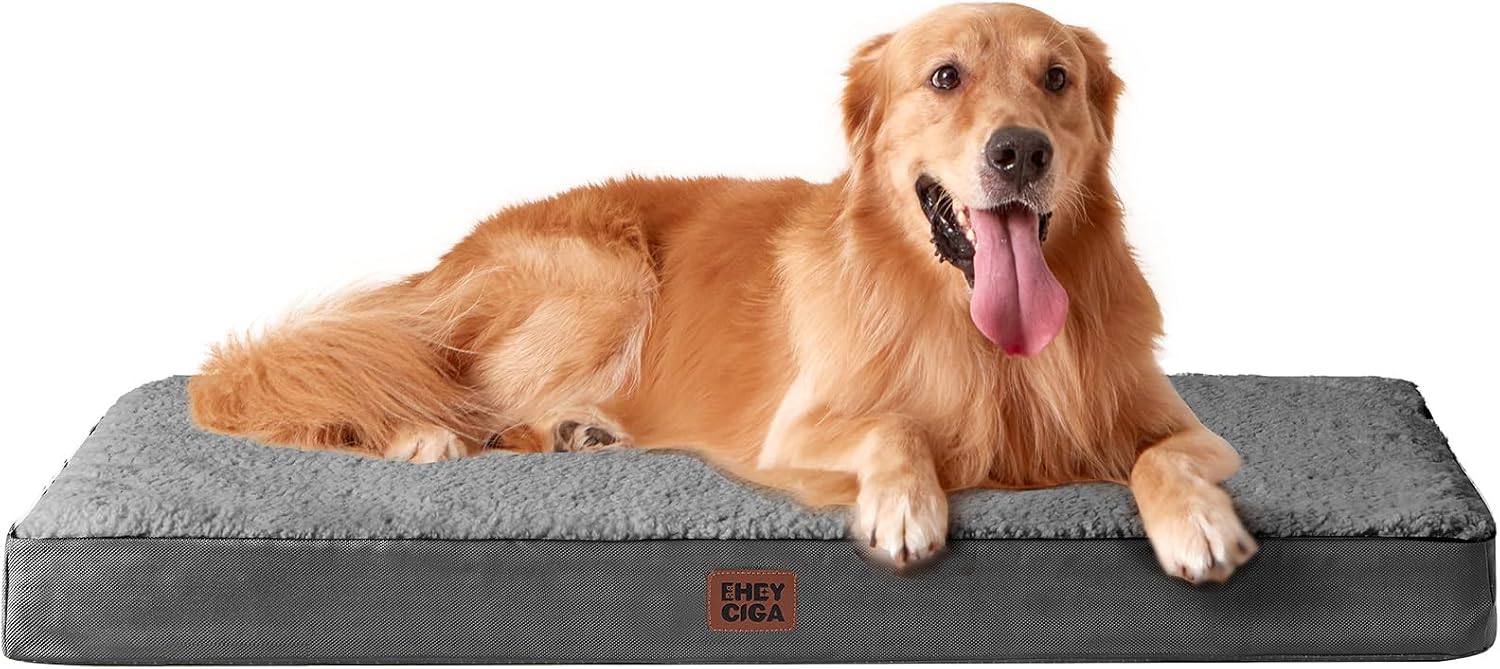
EHEYCIGA Orthopedic Dog Bed Large with Removable Washable Cover, 41IN Grey
Flat slab plus a removable cover, which is the right shape for a crate, and 41 inches suits a big lab in a 42-inch crate
Will not fit a standard 36-inch crate, and the foam density is not published, so treat "orthopedic" as a shape claim until you press it
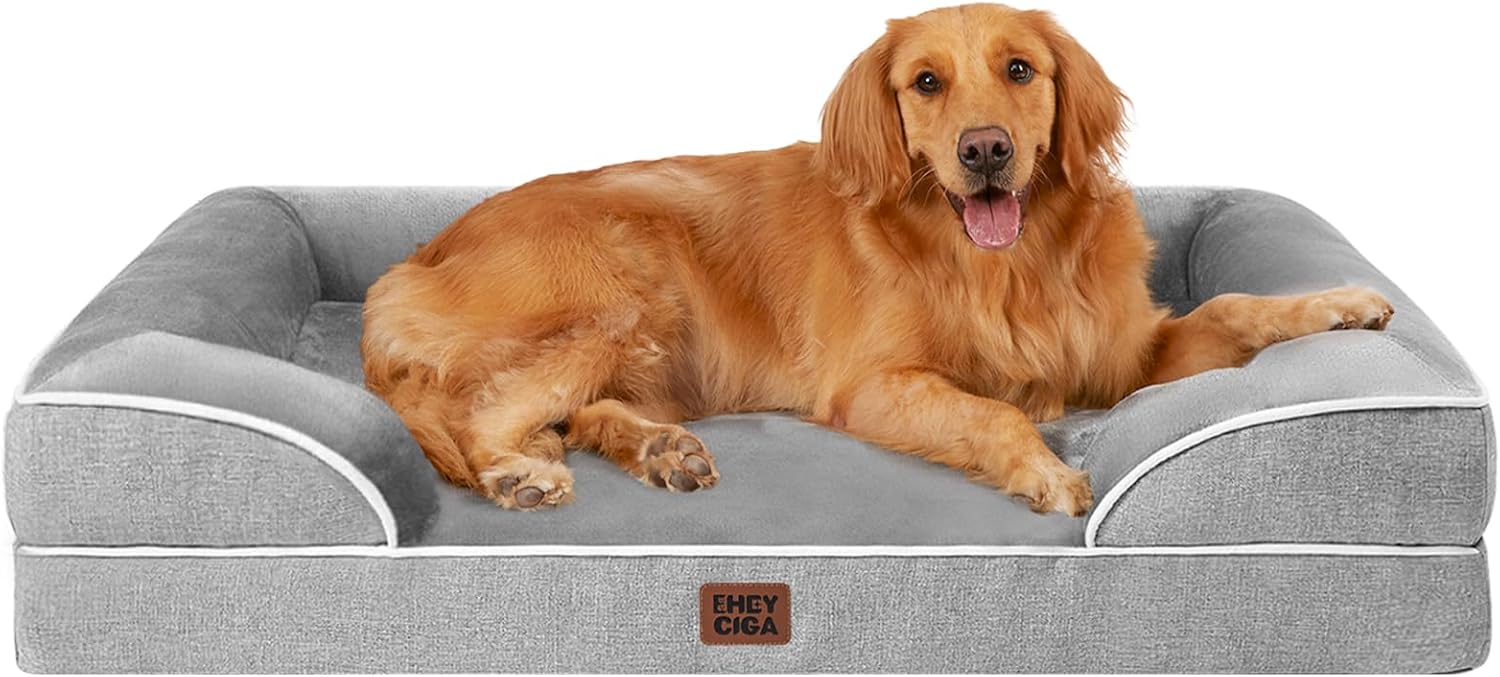
EHEYCIGA Orthopedic Extra Large Dog Bed, Waterproof Washable XL Pet Bed 44"
Largest flat sleeping area of the four, and the waterproof cover matters for a senior dog with accidents
44 inches needs a 48-inch crate, so it is too big for most bedrooms and car crates
Prices and availability were captured from Amazon Creators API and may change.
How I test beds and crate pads
Everything in my notebook starts with three numbers: the crate floor, the dog measured nose to tail, and the date the cover first went through the washing machine. Then I add a foam sink measurement at week one and week eight, because foam is where a cheap bed gives itself away. A bed that sinks half an inch in the first month is a pancake by spring, and I have thrown out enough pancakes to be blunt about it.
I am not going to pretend I have run these four listings under Duke for a year. I have not, and the rules I write by say I do not get to invent a chew timeline I did not earn. What I can tell you is how beds built this way fail in a lab house. Round donut beds lose their middle first. Flat orthopedic slabs hold their shape longer because the foam is one piece and the cover stays taut, but the zipper is usually the next thing to go. I have killed 14 zippers on beds in this price band, and the autopsy is always the same: thin coil, no backing tape, a pull that eats the fabric after a dozen washes.
bedsure vs eheyciga crate pads: the sizing math
This is where most people get burned, and it has nothing to do with brand. A standard 36-inch crate gives you roughly 35 by 23 inches of usable floor. The 36-inch Bedsure donut is 36 inches across at its widest point, so it does not fit that crate on any side, no matter how you rotate it. The round shape is the problem. A rectangle in a rectangle leaves you room to breathe; a circle in a rectangle leaves you dead space in every corner.
Measure the dog first, then the crate. Bed length for floor sleeping should be nose to tail plus about 12 inches, which puts a big male lab in the 44-inch range. But the bed also has to be smaller than the crate floor by a couple of inches so it does not bunch up in the door. Those two rules fight each other, and the crate usually wins. That means the 41-inch EHEYCIGA is the only bed here that works for a large lab in a 42-inch crate, and the 44-inch XL works if you have a 48-inch crate to match.
That is the whole bedsure vs eheyciga crate pads argument in one measurement: the widest, flattest bed that still clears your crate door. The 20-inch Bedsure is not in the conversation for a Labrador. It is a kitten bed, and it is a fine kitten bed.
Bedsure donut beds: calming shape, wrong shape for a lab
The donut bed has a real purpose and I am not going to pretend otherwise. Puppies like to nest, cats like to nest, and a small dog who sleeps curled in a ball looks genuinely comfortable in one. The camel cover on the large Bedsure is soft, it is washable, and for a brand new puppy who is going to ruin whatever you buy, a round bed is tuition you can afford to pay.
The problem arrives with the adult lab. Duke sleeps like a starfish, legs in four directions, and a donut bed asks him to fold into a shape his spine does not do. The extra-large dog version at 36 inches is honest about its size, but the bolster eats six to eight inches of sleeping surface all the way around the rim. What is left in the middle is thin polyfill that compresses in weeks. For a senior with hip dysplasia, the bolster becomes a trip hazard on the way in and out, which is the opposite of what Penny needs.
If you want a donut bed, buy it for a cat or a small dog, and accept that a Labrador will treat it as a pillow at best and a chew toy at worst.
EHEYCIGA orthopedic beds: flat foam and a removable cover
"Orthopedic" is a marketing word, not a spec. The number that matters is foam density, measured in pounds per cubic foot, and my floor for a lab is 3 to 4. Neither EHEYCIGA listing publishes it, so I am not going to invent a figure. What I can say is that the shape is right: a flat slab with a removable cover is the only bed format that gives a 75-pound dog the full footprint to stretch on and stays put in a crate.
The removable cover is the detail people underrate. A cover you can unzip and wash is the difference between a bed that lasts two winters and a bed you throw out because it smells like a wet dog and you cannot get the stink out. The 41-inch grey bed uses that format, and the 44-inch extra large version adds a waterproof cover, which is the feature I would pay for if the dog in question is a senior.
Before you commit, press the foam with your palm in the middle. If it bottoms out against the floor through the fabric, it is a crate pad with a fancy name and you should plan on replacing it inside a year.
Waterproof covers, washing machines, and dead zippers
Wash the cover cold, zip it closed first, and hang it to dry. Never put foam in a hot dryer, and never put a waterproof liner in one either, because the coating cracks and then it is not waterproof, it is just stiff. I have watched a liner turn to confetti in a dryer, and the owner blamed the dog.
For a senior lab, a waterproof cover is not a luxury. Penny has had two bad nights in five years, and both times the bed cover went in the machine while the foam stayed dry. That is the entire value of the feature, and it is the reason I would lean toward the EHEYCIGA extra large listing over the large one for an older dog. Check the zipper the day the bed arrives. If it feels thin or the pull snags on the first open, send it back before the dog ever sees it.
Cost per day, not sticker shock
I do not judge a bed by what it costs on the day you buy it. I judge it by price divided by usable days. A bed that dies in four months and a bed that dies in two years can look very different on the shelf and identical in the notebook. Tuition is what I call the money spent on beds that fail, and every lab owner pays it at least once.
Both of these brands sit in the range where you should expect to replace the bed rather than repair it. That is fine if you are buying for a puppy or a small dog who is gentle on bedding. It is not fine if you are buying for the chewer, and no amount of cover washing fixes a shredded shell.
Which lab gets which bed
If your lab is under three, buy the flat EHEYCIGA that fits the crate and expect it to be a chew toy with a cover. Redirect the chewing to something legal, keep the bed boring, and do not spend real money until the shark phase is over.
If your lab is an adult chewer between one and three, neither of these brands is your answer, and I would rather you spent the money on a ballistic nylon bed or waited. If your lab is a senior with sore hips, buy the largest flat orthopedic bed your room can hold, and if the budget stretches to the Big Barker, that is the bed I recommend for Penny's joints without hesitation.
If you have a cat, a small dog, or a puppy pen, the 20-inch Bedsure is a perfectly reasonable little nest. For a full-grown Labrador, it is not a crate pad, it is a cushion.
What I'm testing next
I am working through chew-proof covers for winter 2026 and tracking which zippers survive Duke, which is a shorter list than the marketing departments would like. I am also documenting Penny's response to orthopedic foam for a senior-dog guide, with sink measurements at four and eight weeks. If either EHEYCIGA bed ends up in the house for a month, it gets a real chew timeline in the notebook, and I will update this comparison with numbers instead of shapes.