Most Labrador beds fail for one of three reasons: the bed is too short, the foam is too soft, or the cover is too thin. Sizing an orthopedic dog bed for labs is a measuring job before it is a shopping job. I keep a notebook with every bed I have put under my two labs, and the failures cluster around the same three numbers every single time.
Duke is 75 pounds and chews like it is his job. Penny is 55 pounds, 11 years old, and came to us with hip dysplasia. They sleep in completely different shapes, and that is the part most buying advice skips. A bed that fits a curled-up 40 pound dog is not a bed for a lab who sleeps like a starfish.
Here is the workflow I run before I spend a dollar, plus two current listings that match the specs most labs actually need.
Why you should trust me
I spent 10 years as a dog trainer working with hunting labs and obedience dogs before I started writing reviews full time, and I have put more than 40 beds under Duke and Penny since. My method is boring. I measure the usable sleeping surface with a tape measure instead of trusting the label. I press a ruler into the foam and record the sink depth. I write down the date each cover fails. Zippers go first, then seams, then foam.
Duke has killed covers that arrived with the word indestructible printed on the box. I have cut beds open to check foam density, because the spec sheet and the stuffing do not always agree. If a listing cannot tell me the foam density, I assume it is low, and that assumption has been right far more often than it has been wrong.
I will pass along what my vet, Dr. Alvarez, told me about labs and joints, but I will not play vet. Bed choice is a comfort and durability decision, not medical treatment.
The three numbers that decide whether a bed works
Get these right before you look at brand, color, or shape. Skip any one of them and you will be replacing the bed inside a year.
Usable length. Measure your lab from the tip of the nose to the base of the tail while he is stretched out flat, then add 12 inches. That is the sleeping surface you need, not the outer footprint of the bed. Bolsters and side walls eat into usable space, so a bed that measures 36 by 24 inches outside might give a big lab closer to 30 inches of flat area inside. A 75 pound lab sprawls past that. A 55 pound lab fits it fine.
Foam density. Orthopedic foam is rated in pounds per cubic foot. The cheap stuff is 1.5 to 2. The good stuff is 3 to 4. Under 3, a 75 pound lab compresses the foam into a pancake within months, and no amount of orthopedic language on the label fixes that. If a listing does not publish density, message the seller and ask. A brand that knows its foam will answer with a number. A brand that does not will send you a paragraph about comfort.
Cover construction. Look for a removable cover, a zipper with a fabric flap over it, and machine washable instructions. Zippers die first in my notebook, usually between 10 and 20 washes. A cover that cannot be removed is a bed you throw away the first time it smells, no matter how good the foam underneath is.
Two beds that match what labs actually need
These two listings hit the size and orthopedic specs I look for, at different points on the weight scale. One is built for a smaller or older lab, the other for a big lab who runs hot.
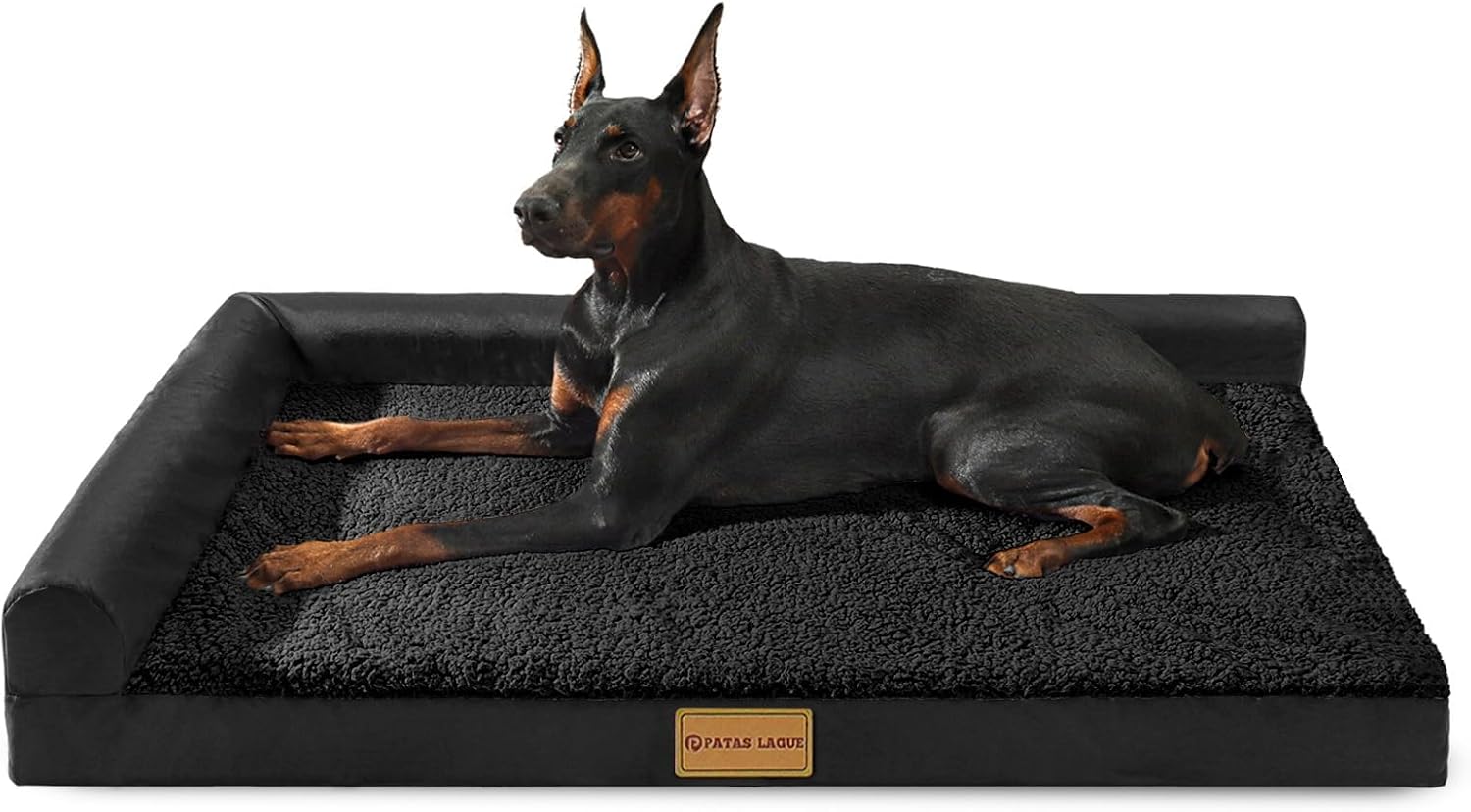
For the smaller or older lab: Patas Lague Orthopedic Large Dog Bed Washable Pet Sofa Bed 36''X24'' Black
 Visit on Amazon →
This is the sofa shape, so there are raised sides a dog can lean against or rest a chin on. The listed footprint is 36 by 24 inches, which is an honest large for a lab in the 50 to 60 pound range and a good match for a dog like Penny who leans into a bolster instead of sprawling. The orthopedic foam and the washable cover are the two features that matter most here. Check current Amazon price.
Be realistic about the label. A 36 inch bed is not a 75 pound starfish bed. Duke would hang off both ends of this one, and he would treat the raised sides as something to chew. If your lab is under 3 years old or over 70 pounds, keep reading.
Flaws but not dealbreakers: Sofa shapes trade flat sleeping area for bolsters. If your lab sleeps flat with his legs out, measure the interior flat space, not the outside edge, before you order. For an older lab who curls and leans, the trade is worth it.
Who it fits: Labs in the 45 to 60 pound range, seniors who want to lean, and owners who need a bed that fits a crate or a smaller footprint beside the couch.
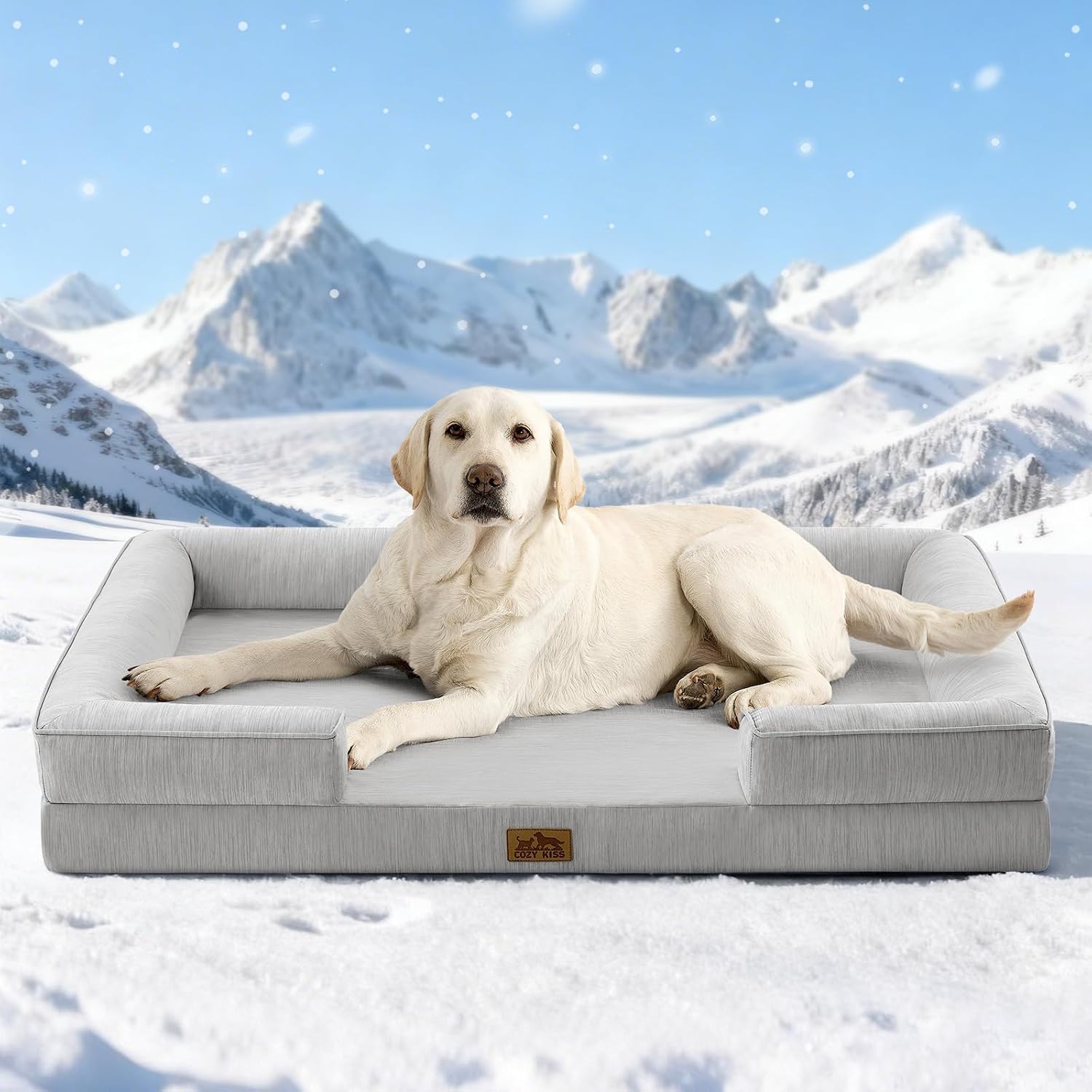
For the big lab who runs hot: COZY KISS Orthopedic Dog Cooling Bed Washable for Extra Large Dogs, XL
 Visit on Amazon →
This one is listed as extra large and it is built with cooling in mind, which matters more than most people think for a double-coated breed. Labs run hot, and a hot lab abandons the bed for the tile floor in July, which means your foam sits unused for a third of the year. The orthopedic foam and the washable cover handle joint support and hygiene, and the cooling construction is the reason a lab stays on it in a warm room. Check current Amazon price.
Extra large is the right category for a full-grown male lab, but verify the dimensions against your own nose-to-tail number before you order. Cooling beds also work best with airflow underneath and around them, so do not wedge one into a corner against a baseboard heater and expect the cooling layer to do anything.
Flaws but not dealbreakers: Cooling fabric and heavy chewers are not a great mix. The outer material on cooling beds is usually softer than the ballistic nylon on a chew-specific bed, so a lab in the shark phase can open a seam if he decides the bed is a toy. This is a comfort bed for a dog past the chewing years.
Who it fits: Labs 70 pounds and up, dogs who sleep flat and wide, and any lab owner whose dog walks away from the bed every summer.
The fitting workflow, step by step
This is the same sequence I run at home, and it takes about 15 minutes. Do it before you open a listing, not after.
Step one: Measure your lab while he sleeps. Wait until he is flat out and relaxed, then run the tape from nose to tail base. Sleeping position is what you are sizing for, not standing height.
Step two: Add 12 inches. That buffer lets him shift without hanging off the edge. A lab who hangs off the edge puts his elbows and hips on the floor, which defeats the whole point of the foam.
Step three: Measure your floor space and your crate. The best bed in the world does not help if it does not fit where the dog sleeps. Write both numbers in your phone before you shop.
Step four: Weigh your lab. A vet scale or a home scale with you holding him, either works. Weight drives foam density needs. Under 50 pounds, 2.5 to 3 pound foam can survive. At 75 pounds, you want 3 to 4.
Step five: Ask for foam density in writing. If the answer is vague, move on. This single question eliminates most of the beds that flatten within a year.
Step six: Press the foam when it arrives. Unzip the cover if you can, then push a ruler into the foam with your palm flat and record the number. If it sinks more than an inch under hand pressure, that foam will not hold a 75 pound lab for two years.
Step seven: Check the zipper before the first wash. Run it open and closed a few times. If it catches or feels flimsy, treat the cover as disposable and plan accordingly.
Step eight: Match the shape to the sleep style. Starfish labs need a flat open mattress with no bolsters eating the middle. Curlers and leaners do better with a sofa or bolster shape. There is no single right answer, only the right answer for your dog.
Washing and drying so the foam survives
The cover is the part you wash. The foam is the part you protect. Wash covers on cold with a mild detergent and skip fabric softener, which coats the fibers and traps odor. Line dry or tumble on low. Heat is what kills foam, so a hot dryer cycle pancakes a bed faster than a 75 pound lab can.
Unzip the cover and check the seams after every few washes. That is where a cheap cover fails, and it fails quietly until the stuffing is on your floor. If your lab is a chewer, a second cover is cheaper than a second bed, and rotating covers doubles the wash life of the set.
Beds that lose the argument
Donut beds. A 75 pound lab does not curl up like a cat. He sprawls. A donut gives him a small circle of foam and a lot of wall to hang over.
Plush and pillow beds for puppies. A lab under 3 years old is a chewer by definition. Plush beds are stuffed toys with a bigger price tag. Buy cheap and replaceable until the shark phase ends.
Anything labeled large without dimensions. Large is a marketing word. A large that measures 30 inches is a medium in a lab's world.
Foam under 2 pounds per cubic foot. It feels great in the store and pancakes in four months. That is the most expensive kind of bed there is.
What this all costs
Do the arithmetic the honest way: price divided by usable days. A bed that flattens in 120 days costs more per day than a bed that holds its shape for 1,000 days, no matter what the two stickers say. Check current Amazon price on both listings above and run the division yourself. That is the only comparison that matters.
The Patas Lague bed is the lower-cost option of the two, and it fits a smaller or older lab. The COZY KISS XL is the larger spend, and it fits a full-grown lab who needs the extra length and runs hot in summer. Neither one is a chew-proof bed for a puppy, and neither one claims to be.
If your lab is under 3, buy the cheap bed, accept that it is tuition, and put the real money into a bed once his jaw settles down. If your lab is past 3 and carrying 70 or more pounds, spend once on the size and density that match your measurements and stop replacing pancakes every spring. That is the whole job. Measure the dog, ask about the foam, check the cover, and let the arithmetic pick the bed.