Two Labradors live in this house. Duke is a 75 pound black lab who chews first and asks questions later, and Penny is an 11 year old rescue whose hips have opinions about every surface she sleeps on. I spent ten years as a trainer before I started writing about gear full time, and the one habit I kept from that job is a notebook: chew timelines, foam sink depth, dates of failure. This comparison of dog crate mats for Labradors comes out of that notebook, and out of living with two dogs who need completely different things from the floor they lie on.
Related: Orthopedic Dog Beds for Senior Labs
The short answer: the waterproof orthopedic bed is the one to buy for a lab that sleeps loose in the house, the absorbent liner is the one that protects your crate and your floors through house training and senior accidents, the cheap crate mat is the right purchase for a puppy you are still raising, and the heating pad is a comfort item for a stiff senior, not a bed. These four pieces are not four versions of the same purchase. They are layers, and most lab households end up needing two of them.
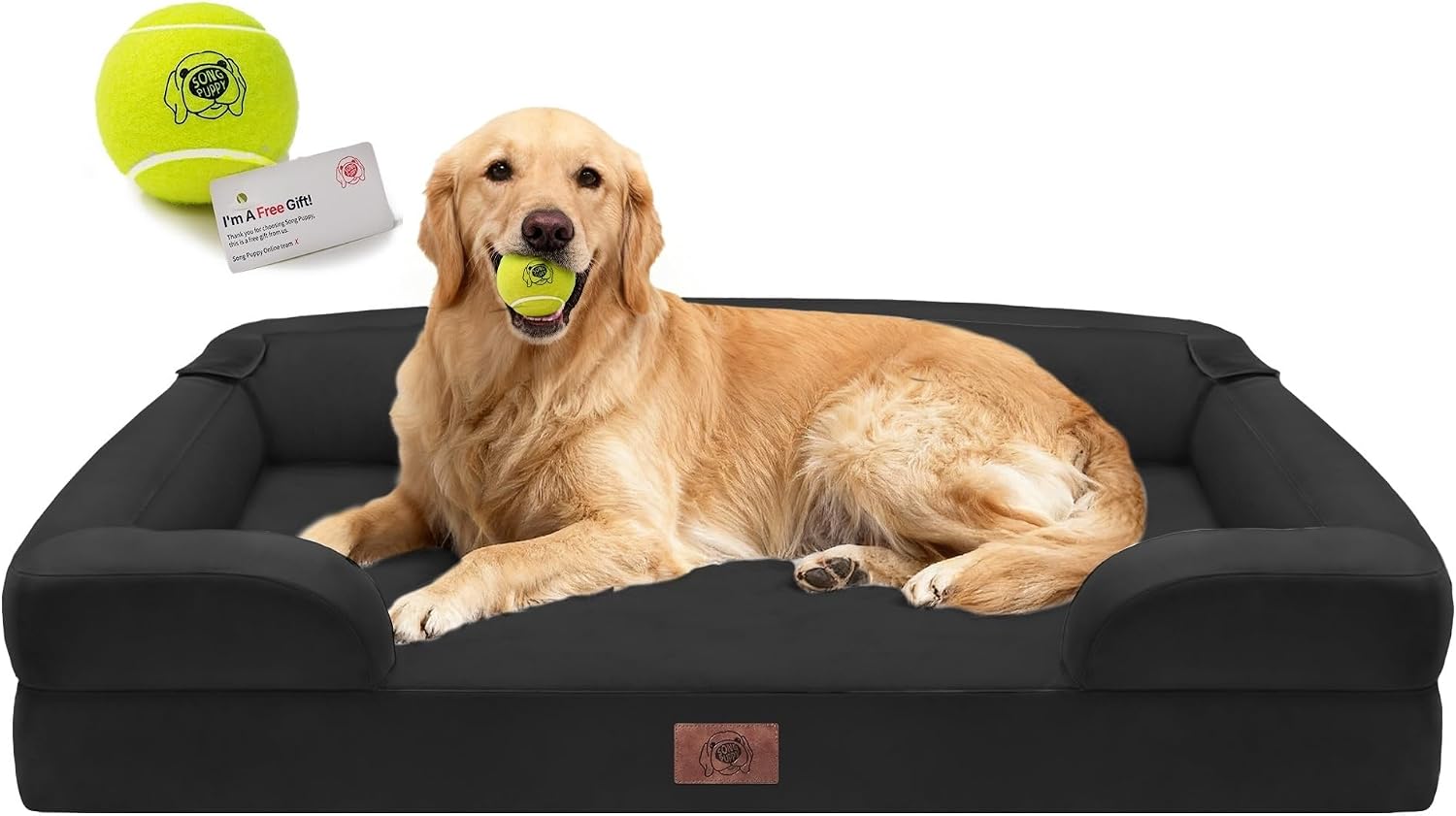
Waterproof Orthopedic Dog Bed for Extra Large Sized Dogs
Sized for an extra large dog that sprawls, with a waterproof surface for accidents and drool
"Orthopedic" is a marketing word until you check the foam yourself, and no cover is chew proof
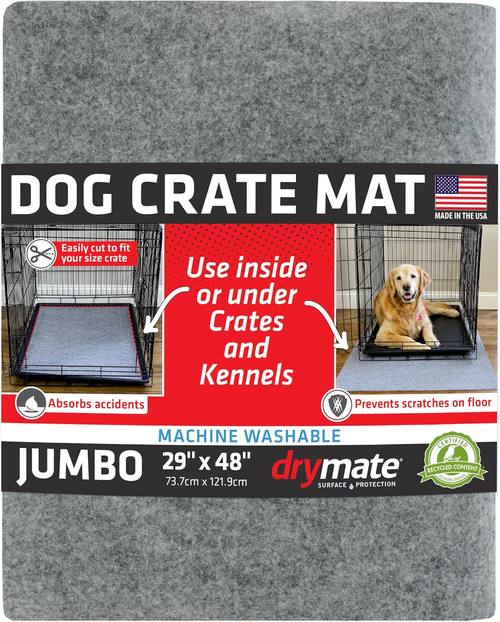
Drymate Dog Crate Mat Liner, Absorbs Urine, Waterproof, Non-Slip, Washable Puppy Pee Pad for Kennel Training (LGrey)(29"x48")
Absorbs urine, stops it at the floor, non-slip backing, washable, and you can cut it to fit
It is a liner, not a bed. Thin by design, with no cushioning at all
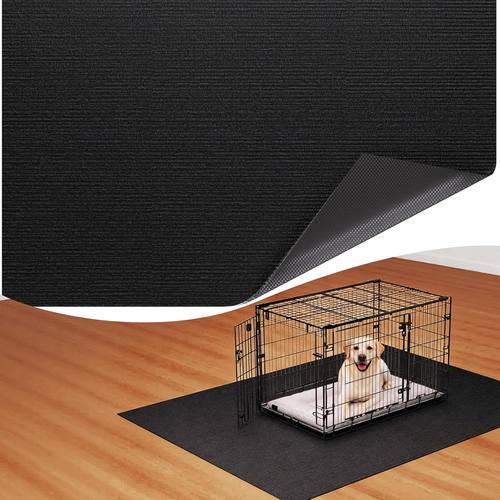
Dog Crate Mat, 24 in X 36 in Dog Playpen Mat Kennel Mat
Cheap enough to treat as disposable, fits a standard crate and a playpen, easy to rotate
Thin padding, and it will not survive a bored two year old lab
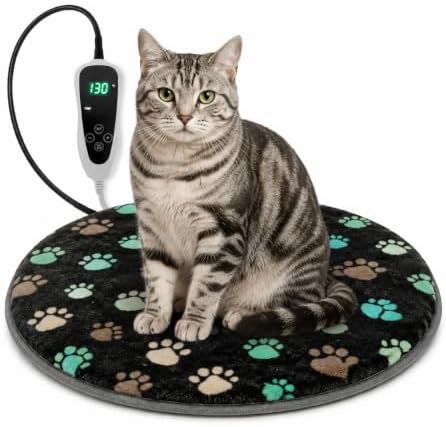
GOLOPET Large Dog Heating Pad 36x24 in with Normally Open Function
Large footprint, and the normally open function means you decide the schedule, not a timer
Heat is a comfort tool for seniors. A chewer and a cord are a bad combination
Prices and availability were captured from Amazon Creators API and may change.
Start with the job, not the product
Most people shopping for a lab bed ask which one is best. The better question is what the surface is supposed to survive. A crate mat, a liner, a bed, and a heating pad do four different jobs, and buying the wrong one is how the sixty dollar mistake happens.
A liner catches liquid. A crate mat gives a puppy something to lie on that you will not cry about when it dies. A bed supports a full grown lab's weight and joints. A heating pad adds warmth to a stiff body. If you skip that sorting step, you end up with a heating pad where you needed a liner, or a plush bed in a crate with a teething nine month old, which is a foam cleanup project waiting to happen.
The absorbent liner: the cheapest insurance in a lab house
The Drymate crate mat liner is the least glamorous item here and the one I would hand to almost every new lab owner first. It absorbs urine, it has a waterproof backing, and the non-slip base keeps it from sliding around under a moving dog. The cut to fit design matters more than it sounds, because crate sizes vary and a liner that bunches up is a liner that leaks around the edges. This one is listed at 29 by 48 inches, which covers the floor of a large crate, and you can trim it down for something smaller. It is made in the USA, and it is washable, which is the feature you will use most.
Where it earns its place: house training a puppy in a crate, protecting a floor under a kennel, and handling the accidents that come with an older dog. Penny is eleven, and senior incontinence is a real thing that nobody warns you about. A washable absorbent layer under her sleeping spot has saved more flooring in this house than any bed upgrade.
What it is not: a bed. This is a thin liner. Put it under a mat or under a bed, or use it as floor protection, and it does its job. Expect it to cushion a 75 pound lab and you will be disappointed.
The crate mat you buy for the shark phase
Lab puppies chew. Not because they are bad, because chewing is what puppies do. That behavior loop runs for a long time in this breed, and my honest advice for anyone with a lab under three is to stop shopping for a nice bed. You are buying a chew toy with a price tag.
The 24 by 36 crate mat is the right answer for that stage. It fits a standard crate and a playpen, the size is honest for what it is, and it costs little enough that replacing it does not hurt. Keep two, rotate them, and put the absorbent liner underneath so a wet mat is not a wet crate floor.
Two things to be clear about. First, this is a thin mat, not a cushion. Second, I would not put it in front of a determined chewer without supervision, because no cheap fabric wins that fight. Its value is that it is cheap, correctly sized, and easy to swap, not that it is tough.
The waterproof orthopedic bed: the real bed
This is the piece most lab owners actually want: a waterproof orthopedic bed built for extra large dogs. Waterproof matters in a lab house for reasons beyond accidents. Labs drool, they come in wet from the yard, and they shed. A surface you can wipe and a bed that does not turn into a sponge is worth more than any plush cover.
Orthopedic support matters for a different reason. Labs carry serious weight, and hip and joint problems show up in this breed more than in most. My vet has told me she sees more joint trouble in labs than any other breed she treats, and that tracks with what I have watched in Penny. Dense foam helps. Soft foam does not, no matter what the listing says.
That is the catch with any bed that uses the word orthopedic: the word is free, the foam is not. Cheap foam is often in the 1.5 to 2 pounds per cubic foot range, and it pancakes within months under a big dog. Good support foam runs closer to 3 to 4. I have cut beds open to check. You cannot do that before you buy, so the practical test is what the foam does after a month of a 75 pound lab lying on it. If it flattens and stays flat, you bought a pancake.
The other honest note: "extra large" is a category, not a guarantee. Measure your dog before you trust it. My rule is nose to tail plus twelve inches, every time, because a lab who sleeps like a starfish needs the full sprawl.
The heating pad for the senior lab
The GOLOPET heating pad is a 36 by 24 inch pad with a normally open function, which means it keeps heating until you switch it off rather than deciding on a timer for you. For a stiff older dog, that is a feature: you control the schedule. The 36 by 24 footprint matches the floor of a standard large crate, so it can sit in a crate, on a bed, or on a spot on the floor where your dog already chooses to lie down.
Warmth is genuinely useful for an arthritic senior. Penny moves better on a warm surface in the morning, and that is not a sales pitch, it is just what an old body does. Heat relaxes, and a relaxed dog lies down longer, and a dog that lies down on a supportive surface instead of tile is a dog whose joints get a break.
Now the warnings, and I mean these. A heating pad is not a bed. It adds no support. And a cord plus a chewing lab is a hazard, so this is for a dog who has outgrown the shark phase and can be trusted unsupervised, or for supervised use only. If your lab is two years old and eats furniture, skip this and revisit it when he is seven. If your lab is eleven and stiff, this is a reasonable comfort purchase.
Sizing: "large" is usually a lie
The sizing lies in this category are the pet peeve I cannot get past. A "large" bed that fits a 40 pound dog is not a large bed, it is a medium bed with better marketing. Here is how the four products line up in practical terms.
The 24 by 36 crate mat matches a standard intermediate crate footprint. A 75 pound lab in a 24 by 36 mat is a lab lying on a mat, not a lab sleeping with room to stretch. It is fine for a puppy or for a dog who curls in a crate, which most labs do not.
The 29 by 48 liner covers the floor of a large crate and gives you trim room for smaller ones. Buy it for the floor, not for the dog to lie on.
The 36 by 24 heating pad is the same footprint as the mat, rotated, and it works under a bed or over one.
The extra large orthopedic bed is the only item here sized for a full grown lab to sprawl. That is the size you want for Duke. For Penny, the same bed plus warmth is the combination that has actually changed her mornings.
The trade-offs nobody puts in the table
A comparison table makes these look like competitors. They are not, and pretending otherwise is how people waste money.
The liner loses on comfort and wins on protection. The crate mat loses on durability and wins on price. The orthopedic bed loses on price and wins on everything that matters to a full grown lab with hips. The heating pad loses on durability, because anything with a cord has a failure point, and wins on comfort for a dog who is past chewing.
The honest way to use this list is to buy the layer that matches your dog's current stage. Puppy under three: liner plus cheap crate mat, and expect to replace the mat. Adult lab past the chewing phase: the orthopedic bed, with the liner underneath if accidents are a factor. Senior with joint trouble: the orthopedic bed plus the heating pad, and a liner if incontinence has started.
Cost per day, the only honest math
Price divided by usable days is the only comparison that tells the truth. A cheap mat that dies in four months costs more per day than a real bed that lasts three years, and I have written that arithmetic down enough times that I am tired of repeating it.
The liner is the cheapest per day of anything here because it survives hundreds of washes and does not care about your dog's teeth. The crate mat is the cheapest up front and the most expensive over time if it is the only thing you own, because you will keep buying it. The orthopedic bed is the biggest single number and the best value if it holds its shape, which is the one thing you have to verify yourself. The heating pad is a comfort expense, not a durability play, and that is fine as long as you know which one you are buying.
What I would buy
For Duke, the 75 pound chewer: the orthopedic bed, with the absorbent liner under it if he is in a crate or on a floor I care about. Nothing else here is sized or built for his weight, and the waterproof surface is the part that keeps the bed usable instead of disgusting.
For Penny, the senior: the orthopedic bed plus the heating pad, because warmth and support solve two different problems for an old dog with bad hips. Add the liner if her accidents have started, because a washable absorbent layer under a senior's bed is cheaper than a flooring repair.
For a puppy: the liner and a cheap crate mat. Nothing else. Wait until the shark phase is over, and then spend the money once on a bed worth keeping. That is the whole strategy, and it has never failed me yet.