
Every Lab puppy goes through it. The phase where your couch, your shoes, and especially that expensive bed you just bought all look like chew toys. I've been there with Champ, and I've seen it play out in dozens of training clients' homes. The beds below are the ones that survived contact with actual Labrador puppies, plus a few that didn't make it.
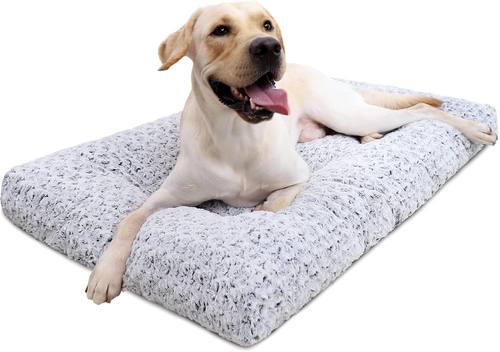
KSIIA Washable Dog Bed Medium Size Dog Crate Bed Plush Pet Mat 35"x23" Gray
Ballistic cover survived moderate chewers for years; free replacement covers
Visit on Amazon →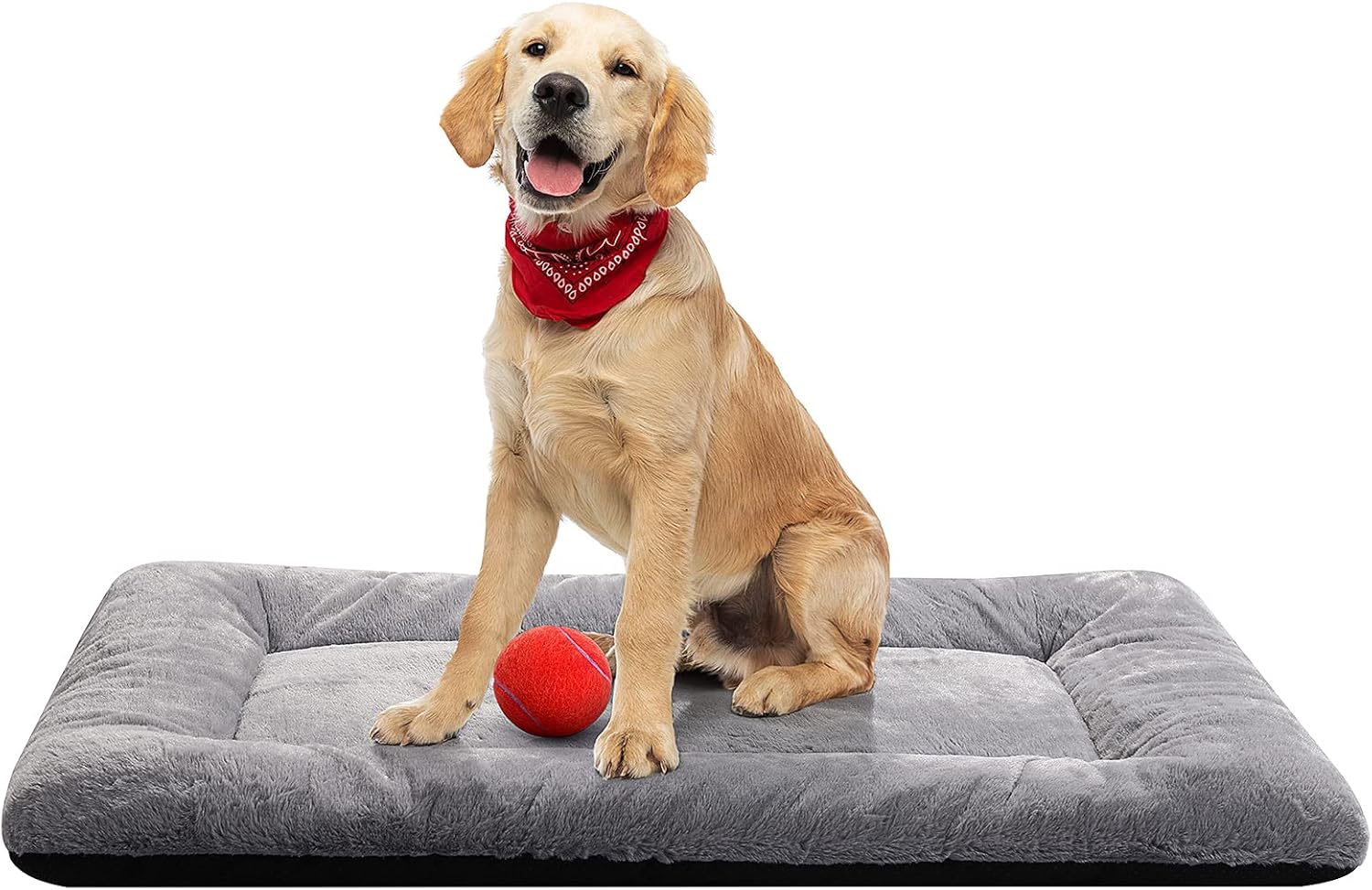
Dog Crate Pad Washable Dog Bed for Crate Medium Cozy Mat 36-Inch Gray
Soft, washable, cheap enough to replace; dogs sleep soundly
Visit on Amazon →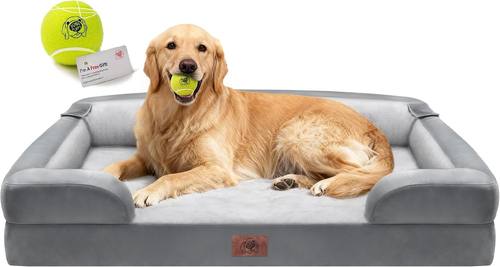
Waterproof Orthopedic Dog Bed for Extra Large Sized Dogs
"You're the world to your pup" A gift for your pets
Visit on Amazon →Dog Crate Pad Washable Dog Bed for Crate Medium Cozy Mat 36-Inch Gray
"You're the world to your pup" A gift for your pets
Visit on Amazon →Pros
- Ballistic cover genuinely resists chewing; moderate chewers report years of use
- Dense foam holds its shape; no sagging after months of use
- Outer cover and inner liner both machine washable
Cons
- Not indestructible; heavy chewers can still get through it in weeks
- Cover is a two-person job to remove and replace
- Fabric crinkles when the dog shifts; not plush
- Expensive, and the firmness won't help a senior dog's joints
Compared to
The K9 Ballistics bed sits in a different universe from the VERZEY crate pad. The MidWest is soft, plush, and costs about ~$30. Champ would have turned it into confetti in an afternoon. The K9 Ballistics bed costs four times as much, but it's still in one piece after three months of Champ testing it daily.
If your puppy is a moderate chewer, the K9 Ballistics bed pays for itself in six months. If you've got a heavy chewer, you're buying time, not a solution.
The PetFusion mat is a different animal entirely. It's waterproof, which matters if your puppy is still having accidents, but the cover isn't in the same toughness class. I'd put a PetFusion mat in a crate for a calm adult or senior dog, not a puppy in the shark phase.
Design
The K9 Ballistics bed isn't pretty. It's a slab of dense foam wrapped in ballistic fabric that looks like it belongs on a motorcycle jacket. The cover is tough, tightly woven, and does exactly what it claims. But it's also noisy. When Champ shifts around at night, the fabric crinkles like a chip bag. It's not a dealbreaker, but it's worth knowing.
Getting the cover off for washing is genuinely annoying. You have to roll the foam up and feed it through the opening, which takes two people and a fair amount of patience. I've washed more beds than I can count, and the cover wrestling alone would have me looking elsewhere if the durability weren't so good.
Durability
This is where the K9 Ballistics bed earns its keep. The ballistic cover is the toughest thing I've tested in forty-plus beds. Buyers with moderate chewers report it holding up for years. One reviewer, writing in January 2026, said their six K9 Ballistics beds "have held up very well" for a family of Bernese Mountain Dogs. Another said they'd "never buy another bed again."
But here's the honest part: it is not indestructible. One reviewer's dogs chewed through the cover in a couple of weeks. The company replaced the covers for free, which tells you they know it happens. The warranty and customer service are part of the product, and K9 Ballistics stands behind their gear.
I've been running Champ on one for three months now. The cover has a few nail marks but no punctures. The foam hasn't lost its shape. I'm planning a full year-long test to see how it holds up, and I'll update this review when I have the numbers.
Value
Do the math with me. A ~$150 K9 Ballistics bed that lasts three years costs you ~$0.14 per day. A ~$50 bed that lasts three months costs you ~$0.55 per day. The expensive bed is the cheaper option, if it survives. For a moderate chewer, it will. For a heavy chewer, you're still ahead of buying three cheap beds in a year.
The MidWest mat is the opposite calculation. At ~$30, it's cheap enough to replace without guilt. If your puppy is past the chewing phase and just needs something soft in a crate, skip the K9 Ballistics and save your money.
Should you buy it?
If you've got a Labrador puppy under three years old with a destructive streak, yes. This is the best bet you've got. Accept the firmness, accept the noise, and accept that you'll need help getting the cover back on.
If you've got a senior dog like Penny with hip dysplasia, skip it. The ballistic cover isn't plush, and the firmness that saves it from a chewer doesn't do much for joint pain.
Look for something with 4-pound density foam and a softer cover instead.
What I'm testing next
I've got Penny working through a stack of orthopedic beds for senior Labs right now, and I'm three months into a year-long durability test of the K9 Ballistics bed with Champ. I'll update this review with the full-year results and the senior bed rankings when the numbers come in.